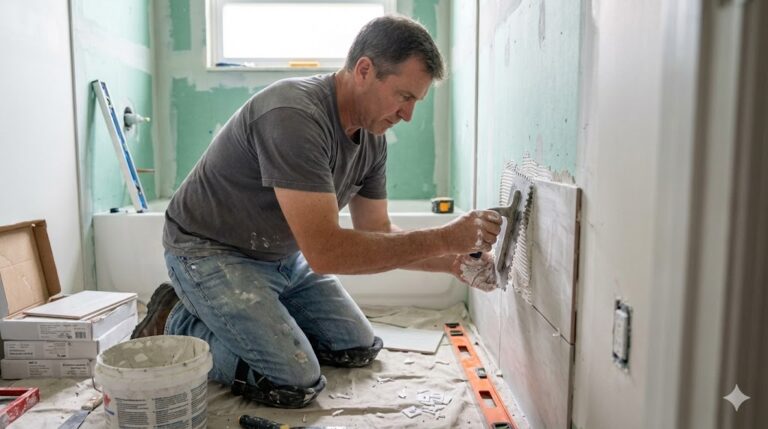


One of the most common mistakes homeowners make when planning a tile project is ordering the wrong amount of tile. Ordering too little can delay your project, while ordering too much wastes money and storage space.
This guide will walk you step by step through how to calculate tile quantities correctly, including how to measure your space, account for waste, and order with confidence.
Step 1: Measure the Area Accurately
Start by measuring the length and width of the area where tile will be installed.
For Floors or Flat Walls
- Measure the length (in feet)
- Measure the width (in feet)
- Multiply length × width to get total square footage
Example:
10 ft × 12 ft = 120 sq. ft
For Showers and Bathrooms
Break the space into sections:
- Shower walls
- Shower floor
- Bathroom floor
- Accent or niche areas
Measure each section separately, then add the totals together. This helps avoid mistakes and ensures you don’t miss smaller areas.
Step 2: Understand Tile Coverage
Tile is usually sold by the square foot per box, not by individual pieces.
Check the box or product listing for:
- Square feet per box
- Tile size (e.g., 12×24, 6×6, mosaic sheets)
Important: Tile size does not equal coverage. Always calculate based on square footage, not tile count.
Step 3: Add Waste (This Is Critical)
No tile installation is waste-free. Cuts, layout adjustments, and breakage are unavoidable.
Recommended Waste Allowances
- Straight layout: add 10%
- Diagonal or patterned layout: add 15%
- Complex designs, herringbone, mosaics: add 20%
Example:
120 sq. ft + 10% = 132 sq. ft total
Always round up, never down.
Step 4: Account for Tile Direction and Pattern
Large-format tiles, wood-look planks, and patterned tile require extra planning.
You may need more tile if:
- Tiles must run in a specific direction
- You want consistent veining or color
- The layout requires symmetry or centering
These design choices increase cutting and waste, so don’t skip the extra allowance.
Step 5: Don’t Forget Special Areas
Many people forget to include:
- Closets
- Shower niches
- Backsplash returns
- Steps or thresholds
Add these areas into your square footage before applying the waste percentage.
Step 6: Order Extra for Future Repairs
Even if everything goes perfectly, ordering a little extra tile is smart.
Tile batches can change color or be discontinued. Having spare tile ensures you can replace a damaged piece years later.
Pro tip:
Order one extra box beyond your calculated total if budget allows.
Step 7: Double-Check Before Ordering
Before placing your order, confirm:
- All areas are measured
- Waste percentage is included
- Tile coverage per box is correct
- You rounded up to full boxes
This final check can save days of delay and hundreds of dollars.
Common Tile Quantity Mistakes to Avoid
- Measuring only the floor and forgetting walls
- Ordering by tile count instead of square footage
- Skipping waste allowance
- Assuming leftover tile can always be reordered later
These mistakes are more common than you think — and entirely avoidable.
Final Thoughts
Calculating tile quantities correctly is one of the most important steps in a successful tile project. Accurate measurements, proper waste allowance, and smart ordering ensure your installation stays on schedule and within budget.
If you’re unsure, a professional tile installer can verify measurements and help you order the exact amount needed — saving you time, stress, and money.
Planning properly before ordering tile makes the entire project smoother from start to finish.