
How to Choose Tile for a Pet-Friendly Home

If you have pets, choosing the right flooring isn’t just about looks — it’s about durability, safety, and easy maintenance. Dogs and cats bring joy, but they also bring claws, spills, accidents, and constant foot traffic. The good news is that tile flooring can be one of the best options for pet-friendly homes when chosen correctly.
This guide will help you understand which tile works best for homes with pets and what to avoid.
Why Tile Is a Smart Choice for Pet Owners
Tile flooring offers several advantages over carpet or hardwood in pet-friendly homes:
- Resistant to scratches and claw marks
- Easy to clean pet hair, dirt, and accidents
- Doesn’t absorb odors like carpet
- Stands up to heavy traffic and play
However, not all tile is created equal. The key is choosing the right type, finish, and size.
Choose the Right Type of Tile
Porcelain Tile (Best Overall Choice)
Porcelain tile is dense, hard, and extremely durable, making it ideal for homes with dogs or multiple pets.
Why it works well:
- Highly scratch-resistant
- Water and stain resistant
- Strong enough for large dogs
- Minimal maintenance
If you want long-term durability with minimal worry, porcelain tile is usually the best option.
Ceramic Tile (Good for Light to Medium Use)
Ceramic tile can work in pet-friendly homes, but it’s slightly softer than porcelain.
Best for:
- Smaller pets
- Low to moderate traffic areas
- Budget-conscious projects
Avoid ceramic tile in areas where large dogs run or jump frequently.
Natural Stone (Use with Caution)
Stone tile like marble, travertine, or limestone can look beautiful, but it requires more care.
Things to consider:
- Can scratch or etch from pet claws
- Requires sealing
- More prone to staining
Stone can work in pet homes, but it’s better suited for lower-traffic areas.
Pick a Slip-Resistant Finish
Pets need traction just like people.
Avoid:
- Polished or glossy tile (slippery for paws)
Choose instead:
- Matte finish
- Textured or lightly structured surfaces
- Tiles rated for slip resistance (look for COF ratings)
Slip-resistant tile helps prevent joint injuries and gives pets confidence when walking or running indoors.
Tile Size Matters More Than You Think
Larger tiles mean fewer grout lines, which is a big advantage for pet owners.
Benefits of larger tile:
- Easier cleaning
- Less grout to stain
- More modern appearance
Popular pet-friendly sizes include:
- 12×24
- 24×24
- Wood-look plank tiles
Choose Grout Carefully
Grout is often the weakest point in pet-friendly flooring.
Best grout choices:
- Dark or medium tones (hide dirt better)
- Epoxy grout (stain-resistant and durable)
Avoid:
- White or very light grout
- Unsealed cement-based grout
Good grout selection makes cleaning much easier and keeps floors looking new longer.
Think About Comfort and Temperature
Tile stays cooler than other flooring, which can be great for pets — especially in warmer months.
If you’re concerned about cold floors:
- Add area rugs in pet resting areas
- Consider radiant floor heating
- Use padded pet beds
Tile combined with rugs gives you durability without sacrificing comfort.
Best Areas for Tile in Pet-Friendly Homes
Tile works especially well in:
- Entryways
- Kitchens
- Mudrooms
- Laundry rooms
- Living areas with heavy traffic
These areas tend to see the most pet activity and benefit most from tile’s durability.
Common Mistakes to Avoid
- Choosing glossy tile for pets
- Using light grout without sealing
- Installing tile without proper subfloor prep
- Selecting decorative tile not rated for floors
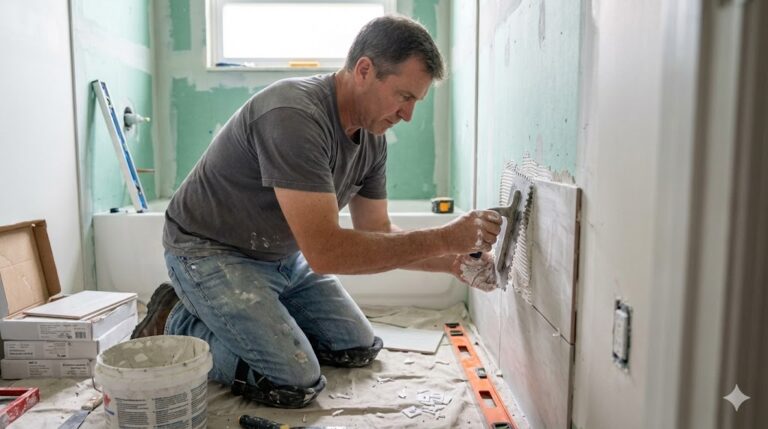
A professional installer can help ensure the tile is both pet-friendly and properly installed.
Final Thoughts
Choosing tile for a pet-friendly home is about balancing durability, safety, and maintenance. Porcelain tile with a matte finish, larger sizes, and stain-resistant grout is usually the best combination for homes with pets.
With the right tile and professional installation, you can enjoy beautiful floors that stand up to paws, claws, and everyday life for years to come.