
The Best Tile Colors for Small Spaces — Design Tips That Actually Work

Small rooms can feel cramped, dark, or busy — especially if the design isn’t thought out. When it comes to tile flooring or wall tile in small spaces, color choice isn’t just about looks. The right colors can make a room feel:
- Larger
- Brighter
- More open
- Visually balanced
In this guide, we’ll walk you through the best tile color strategies for small kitchens, bathrooms, hallways, and more — so you make confident design decisions.
1. Light Neutrals Create an Instant Sense of Space
Light colors reflect more light, which helps visually expand a room.
Best options:
- White
- Cream
- Soft Beige
- Light Gray
These tones bounce light around the room, making walls and floors feel farther apart and airier.
👉 Tip: Use the same tile color on both floor and wall in a small bathroom to create a seamless flow.
2. Pastels Add Soft Color Without Shrinking the Room
If you want more personality than plain neutrals, pastels are your friend.
Pastel tile ideas:
- Pale blue
- Mint green
- Blush pink
- Soft lavender
Pastel tones add subtle style while still letting light reflect. They work especially well as backsplash tiles in small kitchens.
3. Monochromatic Palettes Keep Things Simple and Spacious
Choosing a monochromatic color scheme (variations of the same color) reduces visual clutter.
Example combinations:
- Light gray floor + darker gray accents
- Off-white tiles + ivory grout
- Creamy beige tiles + tan accents
Sticking to one color family helps maintain visual flow, which prevents the eye from stopping — keeping the room from feeling chopped up.
4. Large, Light Tiles = Bigger Visual Area
Color isn’t the only thing that matters — tile size and grout color do too.
Pro layout tips for small spaces:
- Use larger tiles to reduce grout lines
- Keep grout similar in tone to the tile
- Choose matte or soft finishes to avoid glare
Small, dark tiles with dark grout create a mosaic effect — pretty, but visually busy — which can make a small space feel smaller.
5. Bright Accents — But Only in Small Doses
Colorful or bold tiles are fun, but in small spaces they’re best used as accents.
Good accent placements:
✔ Kitchen backsplash
✔ A single shower wall
✔ Vertical accent strip in bathroom
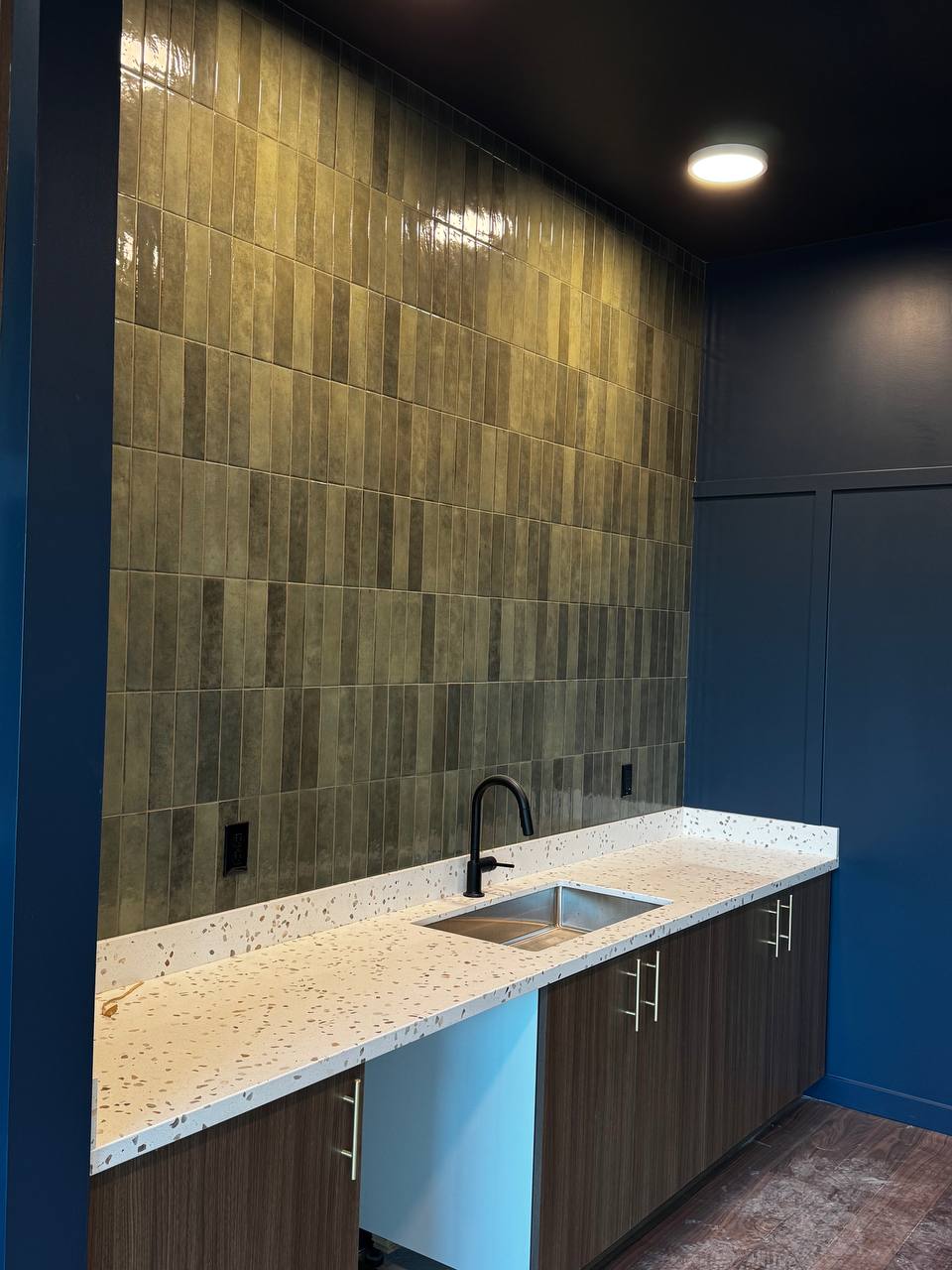
Use bright tile colors (teal, mustard, emerald) as pops — not the main floor or wall color.
6. Cool Colors Visually Recede
Cool colors — blues, greens, soft aqua — appear to push surfaces back, making the space feel bigger.
Great choices for:
- Bathrooms
- Laundry rooms
- Powder rooms
Pair cool tile tones with warm lighting and neutral walls to balance warmth and openness.
7. Avoid Very Dark, Glossy Tile on Floors
Dark floors can look dramatic — but in small rooms they tend to absorb light, shrinking the visible space.
When dark tile can work:
- If paired with high windows
- With light walls and light ceiling
- In patterns that create movement (not solid dark)
Just remember: darker tile = visually smaller space unless balanced correctly.
8. Combine Tile with Light Wall Paint for Maximum Effect
Tile color alone doesn’t determine perception. Pairing your tile with the right wall paint can amplify the effect:
- Light tile + light walls = biggest feeling of space
- Light tile + mid-tone walls = cozy but open
- Neutral tile + bold accent wall = intentional style without crowding
If you choose bold tile accents, keep surrounding walls calm and light.
Quick Color Chart for Small Spaces
| Tile Color Category | Effect on Space | Best For |
|---|---|---|
| Light Neutrals | Makes room feel larger | Floors & walls |
| Pastels | Adds gentle color without shrinking | Backsplashes, walls |
| Cool tones | Visually recedes | Baths, laundry |
| High-contrast dark | Shrinks visually | Accent only |
| Monochrome | Seamless flow | Any small room |
Final Thoughts
Choosing the right tile colors for small spaces isn’t just about aesthetics — it’s about understanding how color, light, and perception work together.
Best overall strategy for small rooms:
✔ Light, neutral tile
✔ Larger format tile
✔ Matching grout
✔ Soft accents
When you combine those elements, your small space will look brighter, more cohesive, and visually larger — all without sacrificing style.